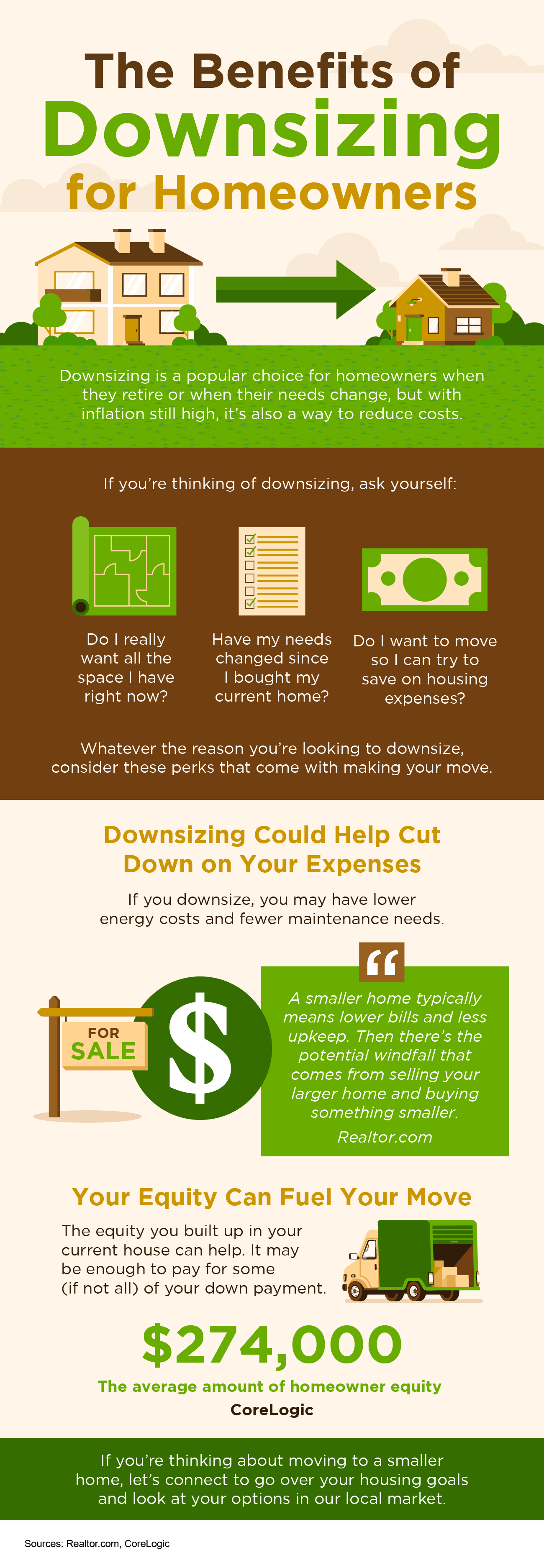
 Downsizing home ownership refers to the process of selling a larger or more expensive property and purchasing a smaller and less expensive one. This decision is typically made by homeowners, often retirees or empty nesters, who wish to reduce their housing expenses, maintenance burden, or simply desire a change in lifestyle. Here's a more detailed explanation of downsizing home ownership:
-
Reasons for Downsizing: People choose to downsize their homes for various reasons, including:
- Financial: Lowering housing costs, reducing property taxes, and freeing up home equity for other purposes.
- Reduced Maintenance: Smaller homes generally require less upkeep and repairs, making it easier for older individuals or those with limited physical abilities to manage their property.
- Lifestyle Change: As children move out or retire, some homeowners find that their current property no longer suits their needs, and they prefer a more manageable living space.
- Location: Some homeowners downsize to move to a different neighborhood or area, which might offer more convenient amenities or be closer to family and friends.
-
Financial Considerations: Downsizing can lead to significant cost savings. A smaller home usually means lower mortgage payments, property taxes, insurance costs, and utility bills. Additionally, selling a larger property may provide a substantial amount of money that can be used for other investments or retirement funds.
-
Emotional and Practical Aspects: Downsizing can be an emotional decision, especially if a homeowner has lived in their current property for a long time and has many memories associated with it. However, the practical benefits, such as reduced cleaning, maintenance, and the freedom to explore new opportunities, often outweigh sentimental attachments.
-
Choosing the Right Property: When downsizing, it's crucial to carefully consider the new property's location, size, and amenities. The new home should meet the homeowner's current and future needs, offering sufficient space while remaining manageable.
-
Decluttering and Organizing: Downsizing typically involves getting rid of belongings that may not fit into the new, smaller home. This process can be challenging, but it provides an opportunity to declutter and organize possessions, keeping only what is essential or meaningful.
-
Timing: The best time to downsize depends on individual circumstances and market conditions. In some cases, people choose to downsize before retirement, while others may do it after retirement when their housing needs change.
-
Real Estate Market Considerations: When selling the current home and buying a smaller one, it's essential to be mindful of the real estate market. It may be advantageous to sell during a seller's market when property prices are high, and there is strong demand. Conversely, buying during a buyer's market may provide more options and potentially better deals on the new property.
-
Seeking Professional Advice: Homeowners considering downsizing should consult with real estate agents, financial advisors, and legal professionals to understand the financial implications, tax considerations, and legal aspects associated with buying and selling property.
Overall, downsizing home ownership can be a strategic and fulfilling decision for those seeking to simplify their lives, reduce financial burdens, and embrace a new chapter in their journey.